

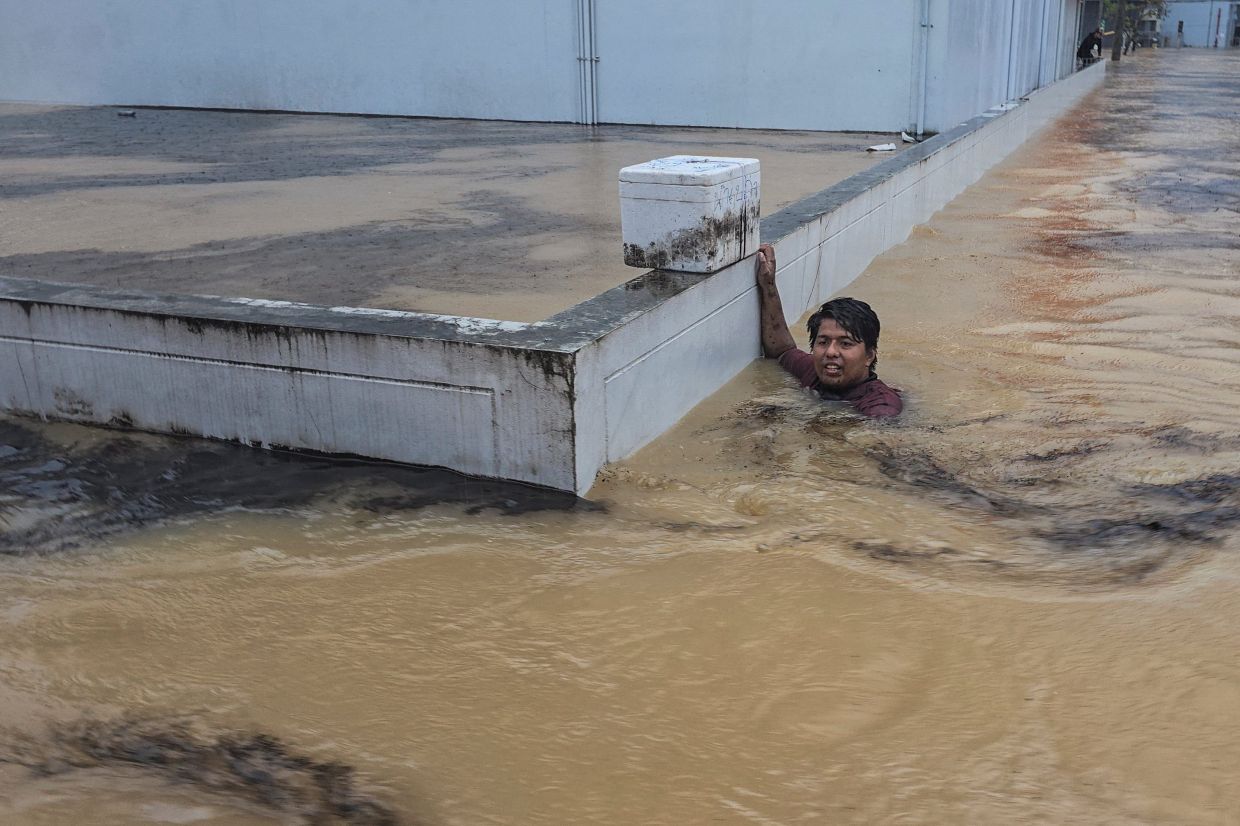
BANGKOK: The Tourism Authority of Thailand (TAT) has warned that the severe flooding in southern Thailand, particularly in Hatyai, Songkhla, is already dragging down tourism demand, with expectations that Malaysian tourists will cancel all travel plans to the south this week.
Governor of the Tourism Authority of Thailand Thapanee Kiatphaibool said that throughout the past weekend, around 15 Malaysian operators contacted TAT to inquire about the worsening flood situation in southern Thailand, especially in Hat Yai district.
These include tour companies, travel agencies and free independent traveller groups.
TAT now anticipates that Malaysian tourists will cancel all trips to southern destinations this week due to prolonged flooding and safety concerns.
Malaysia’s mainstream media has been reporting continuously on the flood situation and the case of Malaysian tourists stranded in Hatyai across television, online news platforms and social media, prompting widespread worry among the public.
The Malaysian government has also issued a flood warning alert, advising citizens to avoid travel to southern Thailand, leading to an immediate drop in travel demand and likely short-term suspension of travel.
Reports from Malaysian media between Nov 21 and 24 explained that Hatyai and nearby areas had experienced days of continuous heavy rainfall, causing sudden flash floods and rapidly rising water levels. Thais and foreign visitors, including Malaysian tourists, were directly affected, with many stranded in hotels or unable to evacuate safely.
According to Malaysia’s Ministry of Foreign Affairs, around 4,000 Malaysians are currently in Hatyai and nearby areas affected by the flooding. The authorities have confirmed that all remain safe.
Many Malaysians stranded in hotels or local accommodations have received food and basic assistance, though some reports indicate they must ration supplies as shops are closed or hard to access. Power and communication disruptions were also reported in some areas.
The Malaysian Consulate in Songkhla is coordinating closely with the Thai local authorities to evacuate and relocate affected tourists. The consulate has instructed Malaysian nationals who are stranded to wait in hotel lobbies to facilitate evacuations.
While water levels have begun to recede in certain locations, the rain continues, and the situation remains under close monitoring, as water levels could rise again until Nov 24.
The Malaysian authorities advise their citizens to avoid travelling to Hatyai and surrounding areas for the time being, due to uncertainty over flood conditions and the possibility of further disruptions.
Hospitals affected
Flooding in the Hatyai district of Songkhla remained deeply concerning on Nov 25, particularly at Hatyai Hospital, the province’s main medical hub.
On Nov 24, the hospital’s official Facebook page issued an urgent announcement after flood waters breached parts of the hospital compound.
It advised the public to shift to telemedicine services for safety and convenience as conditions worsened. The hospital added that further adjustments to onsite services might be necessary and would be announced in due course.
Amid the mounting pressure, a moving story spread rapidly online.
Facebook user Paseeyah Thoh, a member of the hospital’s medical staff, posted photos and a message reflecting the team’s commitment.
Her post read: “Mum and Dad, please don’t worry. We’ll take good care of them. Even without electricity and water, we’ll still look after them as best as we can. We care for every patient as if they were our own children. The little ones have been incredibly patient. Not a complaint from them.”
Her words highlighted the dedication of working under severe constraints including power failures and a water outage on top of the ongoing flood emergency.
The post quickly gained widespread attention, drawing thousands of likes, shares and messages of support, with many commenters praising the staff’s sacrifice and compassion and writing messages.
The outpouring of goodwill reflected the public’s deep trust in the medical teams on the front lines of the crisis. – The Nation/ANN